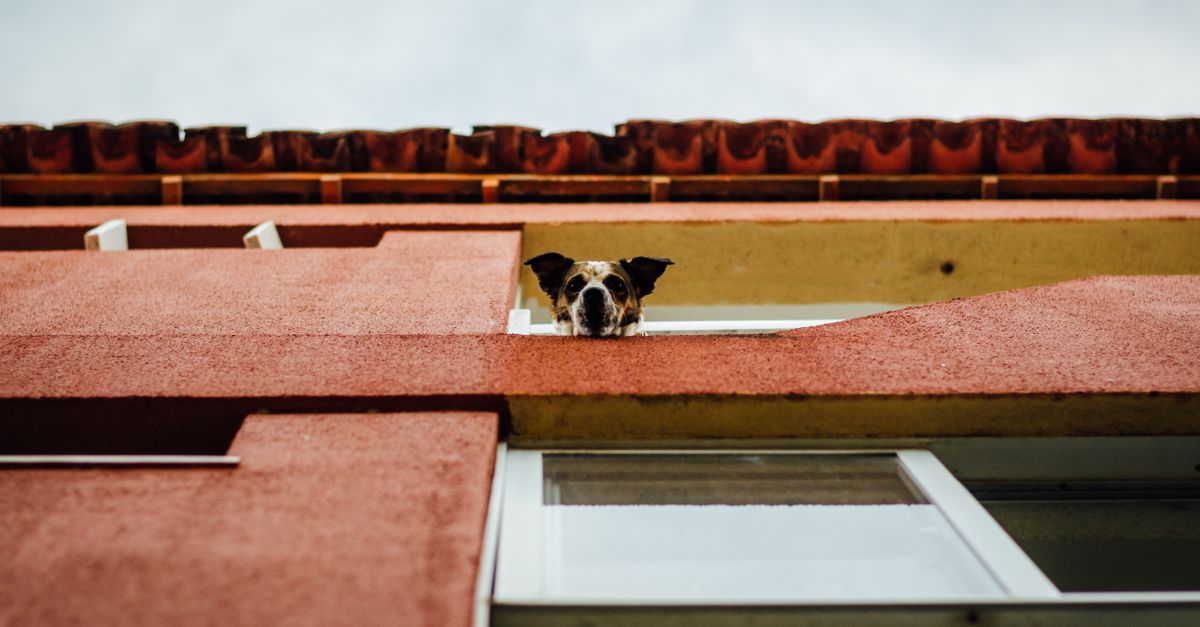
A cat flap is easy to walk past. It is not furniture, nobody sits on it, and by the time a clerk has been through the kitchen and the bathroom it has stopped registering at all. Two years later, when the hinge has gone and the flap hangs crooked, it becomes a short disagreement about who broke it. The inventory is either the thing that settles that or the thing that never mentioned it.
Pets sit in the same part of the record, only larger. A carpet dulls slowly at a doorway. A door frame picks up scratches along the bottom edge. A patch of lawn thins out over a summer. None of it happens overnight and none of it can be dated afterwards, which is the whole reason the check in matters. Where there is a record, the end of a tenancy is a comparison between two dated observations of the same rooms. Where there is not, it is a conversation about memory, and about whichever photographs somebody happened to take.
The animal, in a few plain lines
The pet itself needs a short factual entry. Enough to say what was there, not enough to become a character reference.
- Species and type in ordinary words. For a dog, the size rather than a guessed breed.
- How many. Two cats recorded at the start and one mentioned at the end is a question worth having an answer to.
- Names, if the tenant offers them. Small detail, fewer ambiguities later.
- Whether the animal was in the property during the visit, and where it was kept while rooms were recorded.
- Equipment belonging to the tenant that was there at the time: beds, bowls, crates, litter trays, scratching posts.
What should not go in is temperament, the condition of the animal, or anything about how the household lives. Predictions are worse still. A line saying an animal is likely to cause trouble is an opinion sitting in a factual document, and it makes everything around it easier to doubt.
The rooms an animal actually uses
After that it is ordinary inventory work, with closer attention to the places animals go.
- Carpets and rugs. Existing marks, worn patches, pulled loops and dulled areas, particularly at doorways and beside furniture.
- Soft furnishings. Hair, marks and wear on sofas, chairs, curtains and cushions. Note removable covers and their condition, because a cover that can be washed is a different item from one that cannot.
- Doors, frames and skirting. Scratches, especially low down. Old fixings, screw holes or pressure marks from a stair gate or a pet barrier.
- Floors. Scratches and loss of finish on wood, scuffs and marks on vinyl, discoloured grout.
- Walls. Low scuffs and marks beside doorways.
- Gardens and outside. The lawn, worn paths, borders, shrubs, fences and gates as found.
If a room has a noticeable smell, describe it in plain words and say which room. Do not guess at the cause and do not treat it as evidence of anything. Odour changes with weather, ventilation and how a building is being used, which is one more reason the note carries a date.
Fittings that exist for the animal
Plenty of rented homes already have the infrastructure: cat flaps, outside runs, kennels, aviaries, hutches, fixed feeding stations, tie points, gates and fencing. These belong to the landlord, and they are easy to miss because they are not furniture and nobody sits on them.
Each one should appear in the contents schedule, described as found, photographed, and marked to remain unless the tenancy says otherwise. A cat flap recorded in good order at the start is a straightforward item at the end. A run or a hutch photographed on the day it was installed is the same.
The tenant's own equipment
A cat tree, a crate, a dog bed, a litter tray. Record them as present at the visit and say clearly that they are not the landlord's contents. Without that line, a check out can produce a claim for a missing item that was never the landlord's to begin with. Where it is practical, ask whether the equipment can be moved so the floor and walls behind it can be photographed.
Photographs do the heavy lifting
Dated photographs of the rooms where the animal is kept, taken in the same order and from roughly the same position at every visit, are the most useful thing in the file. Close up photographs of existing marks matter just as much, because a mark described in words is a claim and a mark photographed on a date is a record.
Photograph the item rather than the animal where condition is the point. Take the photographs before the room is rearranged, and keep them with the room they belong to rather than in a separate gallery that loses all context.
A mark is not a conclusion
The report says what is visible and where it is. A scratch on a door frame. A stain on a carpet. Hair worked into a sofa cushion. A chew mark on a skirting board. It does not say the dog did it, does not describe anyone as careless, and does not say a carpet needs replacing.
There are usually several explanations for the same visible condition, and the clerk was present for none of them. Staying with observation also makes the record harder to argue with, because there is nothing in it to disagree with except the observation itself. Reports on damp follow the same discipline: what can be seen, in which room, on what date.
An assistance dog is not a pet
An assistance dog should never be entered on a tenancy record as a pet. It is not one, and describing it as one puts a factual error at the centre of a document whose only real value is reliability. Record the property in the ordinary way. Any question about permission or terms belongs with the tenancy agreement and proper advice, not with the inventory.
Where permission sits
Consent to keep a pet lives in the tenancy agreement, and the terms attached to that consent are a matter for the agreement and for current government guidance rather than for an inventory report. In England the recent tenancy reform changes are part of that background, and they are worth reading directly rather than at second hand. Payments connected with pets fall under the fee rules, which are a separate subject again. None of it alters what the report does, which is to record a property on a date, in words and photographs, for whoever has to look at it later.
A short list for the visit
- The animal, how many, whether present, and where it was kept during the visit.
- The tenant's equipment listed and marked as excluded.
- Carpets, soft furnishings, doors, frames, skirting and floors as found.
- Gardens, fences, gates and outside structures as found.
- Fittings for the animal photographed, listed and marked to remain.
- Any noticeable smell described plainly and located.
- Dated photographs of the rooms and of existing marks, in a consistent order.
At the other end, check out compares like with like: the same rooms, the same order, comparable light, dated photographs. New marks are described against the starting record rather than against an impression of how the property used to be. What happens next is not the report's decision. Fair wear and tear, cleaning standards and any claim about condition are separate questions, considered by other people with the tenancy agreement in front of them.
Get the baseline right and the conversation at the end has something solid to stand on.